Quick Answer: Any extension socket installation Singapore homeowners want carried out on fixed wiring should be done by a BCA-certified, expert electrician — DIY permanent wiring is unsafe and can void your home insurance. Expect to pay roughly $40–$200 per point depending on whether the run is surface-mounted or concealed, and always ask to see your electrician’s certification and track record before work begins.
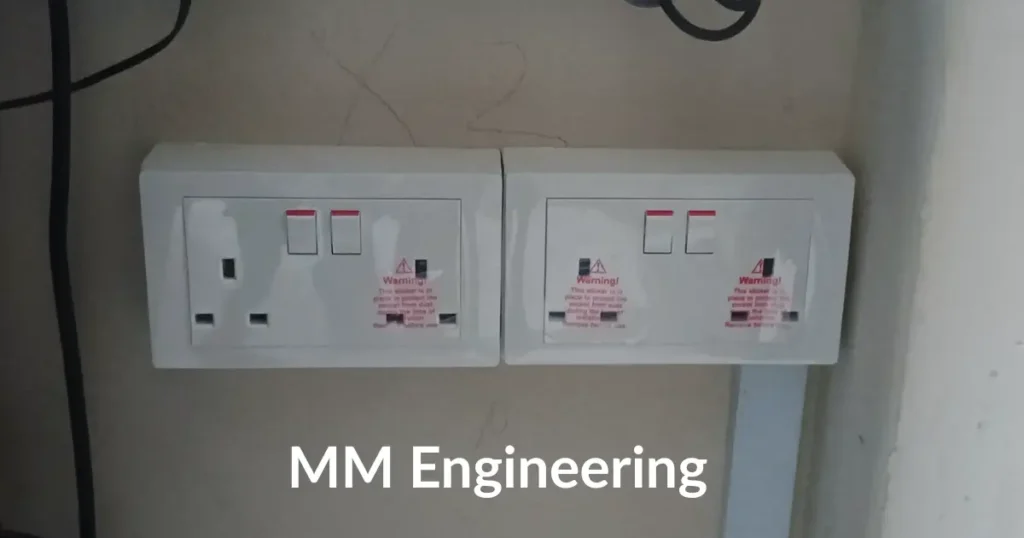
Work-from-home setups, smart home hubs, air fryers, induction hobs and a growing fleet of chargers have pushed the average HDB flat or condo unit well past what its original wiring was designed to handle. The result is a familiar sight across Singapore: power strips daisy-chained off power strips, extension cords snaking under rugs, and sockets that feel warm to the touch. It’s tempting to grab a screwdriver and add a socket yourself, or get a general handyman to “tap a line” from an existing point — but that shortcut carries real legal and safety consequences, from invalidated insurance claims to fire hazards from overloaded circuits.
This guide covers exactly what the law requires, what a proper extension socket installation Singapore job should look like, what it costs, and how to avoid the compliance traps that catch out well-meaning homeowners every year.
Any fixed electrical installation work — including adding, relocating, or extending power sockets — should be carried out by a BCA-certified, expert electrician. This applies whether you live in an HDB flat, a private condominium, or a commercial unit. Plugging in a portable extension reel is fine; cutting into your wall, junction box, or distribution board to add a permanent socket is not something a layperson should attempt.
There are three practical reasons this matters:
Before hiring anyone for extension socket installation Singapore-wide, ask for their certification and registration details, and check reviews or past work — a legitimate, expert electrician will never hesitate to share this. If you’d rather leave the certification-checking and compliance paperwork to a team that already does it by default, our HDB electrical services page covers how we handle socket additions end to end.
Extension socket installation Singapore rules are stricter inside HDB flats, which come with specific structural constraints that differ from landed property or newer condo developments — always check the latest guidance on the HDB website before starting work:
Choosing between surface-mounted and concealed wiring is usually the first real decision homeowners face, and it comes down to aesthetics, building constraints, and budget.
| Factor | Surface-Mounted (PVC Trunking) | Concealed Wiring |
|---|---|---|
| Aesthetics | Visible trunking along walls/skirting; can be painted to match wall colour | Wires hidden within non-structural walls or ceiling voids; cleaner finish |
| HDB/Condo Constraints | Permitted almost everywhere, including near RC structural walls | Not allowed in RC structural walls/beams; only viable in non-structural partitions or false ceilings |
| Installation Time | Faster — typically completed within hours | Longer — may involve hacking, patching, and repainting |
| Cost Implication | Lower labour and material cost | Higher, due to wall-opening, patching, and reinstatement work |
| Future Modifications | Easy to inspect, extend, or relocate | Harder to access; may require re-hacking the wall |
| Best For | Rental units, budget renovations, quick additions | Full renovations where walls are already being opened up |
For most HDB extension socket installation Singapore projects that aren’t part of a full renovation, surface-mounted trunking is the pragmatic, code-compliant choice.
Pricing varies by electrician, unit accessibility, and whether new wiring or a junction box is needed, but the following ranges reflect typical costs for extension socket installation Singapore homeowners can expect, covering HDB power point installation cost and related work:
| Service | Typical Price Range (SGD) |
|---|---|
| Single socket (surface-mounted, existing circuit) | $40 – $100 |
| Double socket (surface-mounted, existing circuit) | $80 – $150 |
| Socket with new wiring / junction box run | $120 – $250 |
| Concealed socket (wall-opening + patching) | $180 – $350+ |
| Dedicated circuit for high-load appliance (aircon, induction hob) | $250 – $500+ |
| Call-out / inspection fee (often offset against job cost) | $30 – $80 |
Always request an itemised quote before work begins, and confirm whether the inspection fee is deducted from the final bill if you proceed.
A proper extension socket installation Singapore job follows a consistent professional sequence, regardless of whether it’s a single point or a multi-socket extension:
Extension socket installation Singapore rules are fairly relaxed for simple additions: a socket addition on an existing circuit, done via surface-mounted trunking by a BCA-certified, expert electrician, generally doesn’t require separate HDB approval. However, if it’s part of a larger renovation involving hacking or new circuits, it should be included in your renovation permit submission. When in doubt, ask your electrician or check with HDB before work starts.
Most homeowners pay between $40 and $150 for a straightforward surface-mounted single or double socket on an existing circuit. Costs rise to $180–$350 or more for concealed wiring that requires wall-opening and patching, or for dedicated circuits serving high-load appliances.
It’s best not to attempt extension socket installation Singapore work yourself. Fixed wiring carries real fire and shock risks, and Singapore’s electrical safety standards call for this work to be carried out by a BCA-certified, expert electrician. Portable extension reels and power strips are fine for everyday use; cutting into walls or junction boxes to add permanent sockets should always be left to a certified professional.
Ask for their BCA certification, company registration (UEN), and examples of past work or reviews. A properly certified, expert electrician will have no problem sharing these details — never take a business card or word of mouth as sufficient proof.
Surface wiring runs through PVC trunking mounted on the wall surface and is permitted almost everywhere, including near structural walls. Concealed wiring hides cables inside the wall itself but cannot be embedded into reinforced concrete structural elements — it’s only viable in non-structural partitions, and typically costs more due to the hacking and patching involved.
Whether you’re adding a single point for a new WFH desk or extending power across an entire room, the safest and most cost-effective approach to extension socket installation Singapore homeowners can take is the same: engage a BCA-certified, expert electrician, confirm their certification and track record, and make sure the work follows SS 638 standards from the DB box to the final faceplate. Whatever the scope, planning your extension socket installation Singapore project around a certified electrician keeps it safe and compliant. Need a hand? Get in touch with our team for a fixed, upfront quote on your next socket installation.
