Water Tanks Β· Cleaning Β· Repair Β· Replacement

Water Tank Cleaning Singapore

Need water tank cleaning in Singapore because of dirty water, sediment or an ageing tank? Our PUB licensed plumber team cleans, repairs and replaces water storage tanks for landed homes, shophouses and commercial buildings, and services the pumps and valves connected to them.

  • Tank cleaning
  • Tank repair
  • Tank replacement
  • Float valves & pumps

Quick answer: Water tank cleaning in Singapore involves draining the storage tank, removing sediment, sludge and biofilm, scrubbing and rinsing the walls and floor, checking the lid, float valve and overflow, then refilling. Tanks that are not cleaned regularly can collect sediment, insects and algae that affect water quality and clog taps and heaters. Many owners clean their water tank at least once a year, and building owners should check PUB’s requirements for water storage tanks. MM Engineering Works cleans, repairs and replaces tanks and confirms the price before starting.
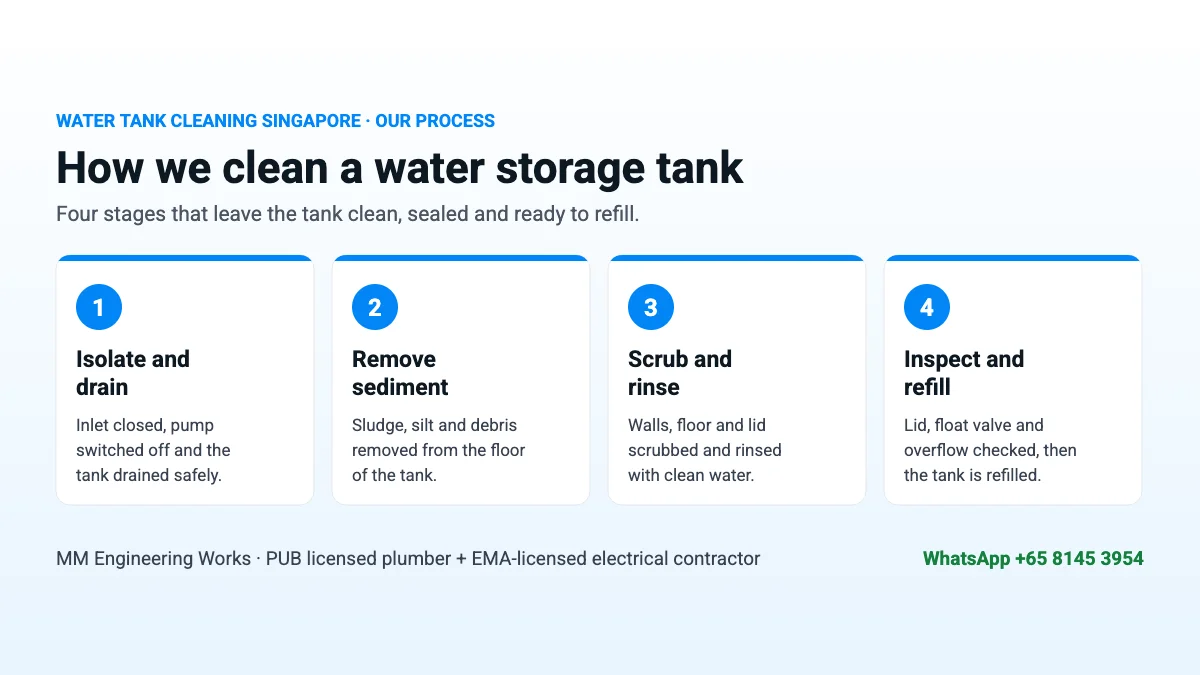
Water tank cleaning Singapore: 4-stage process to clean a water storage tank
The four stages of a water tank cleaning visit.
Warning signs

Signs Your Water Tank Needs Cleaning

Dirty tanks show up in the water long before anyone opens the lid.

  • Cloudy or brown waterSediment stirred up from the bottom of the tank.
  • Bad smell or tasteOrganic matter or biofilm growing inside the tank.
  • Particles at the tapGrit and flakes collecting in tap aerators and shower heads.
  • Insects or debrisA damaged lid or missing screen lets insects and leaves in.
  • Clogged heatersSediment settling inside storage water heaters.
  • Not cleaned in over a yearIf you cannot remember the last cleaning, it is due.
What we do

Water Tank Services We Provide

We look after the whole tank system, not just the inside of the tank.

Tank cleaning

Draining, desludging, scrubbing and rinsing of storage tanks.

Lid and screen repair

Damaged lids, seals and insect screens repaired or replaced.

Float valve repair

Faulty float valves that overflow or fail to refill replaced.

Tank replacement

Old, cracked or corroded tanks replaced with a new tank of suitable size.

Pipe and valve works

Inlet, outlet, overflow and drain connections repaired.

Pump servicing

Pumps connected to the tank checked. See water pump repair.

How it works

Our Water Tank Cleaning Process

A typical cleaning takes a few hours, depending on tank size and access.

  1. Isolate

    We close the inlet, switch off connected pumps and drain the tank safely.

  2. Desludge

    Sediment and sludge are removed from the tank floor.

  3. Scrub and rinse

    Walls, floor and the underside of the lid are scrubbed and rinsed until clean.

  4. Inspect and refill

    We check the lid, float valve, overflow and connections, then refill and restore supply.

Why it matters

Why Regular Water Tank Cleaning Matters

A storage tank holds water for hours or days before it reaches your taps. Keeping it clean protects your household and your plumbing.

Water quality

Sediment and biofilm affect the look, smell and taste of the water.

Protects appliances

Less sediment reaching water heaters, washing machines and taps.

Fewer blockages

Grit clogs aerators, shower heads and valves.

Early fault detection

Cleaning visits spot cracks, leaks and corrosion before they fail.

Pest prevention

Checking lids and screens keeps insects and debris out.

Peace of mind

A documented cleaning record for your home or building, useful for tenants, buyers and building inspections.

Tank types

Types of Water Tank in Singapore Properties

Different tank materials age in different ways.

  • Polyethylene (plastic)Light and corrosion-free, but can become brittle with sun exposure over time.
  • Stainless steelDurable and hygienic, but joints and welds should be checked for leaks.
  • FRP / GRP panel tanksCommon in buildings; panels and seals need periodic inspection.
  • Concrete tanksFound in older buildings; surface coatings can deteriorate.
  • Roof tanksExposed to heat and weather, so lids and screens matter most.
  • Ground or basement tanksUsually paired with transfer pumps, which also need servicing.
Repair or replace

Water Tank Repair vs Replacement

We tell you honestly whether a repair will last or whether the tank should be replaced.
Usually repair

  • Faulty float valve or ball cock
  • Damaged lid, seal or insect screen
  • Leaking pipe connection or valve
  • Minor surface damage on a sound tank

Usually replace

  • Cracks in the tank body
  • Heavy corrosion or rust
  • Brittle, sun-damaged plastic tank
  • Tank too small for the property’s needs
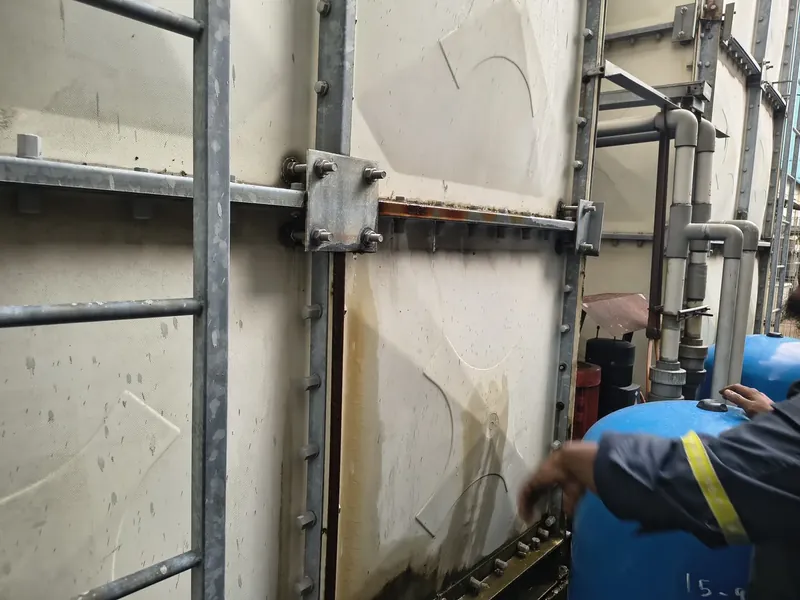
Leaking FRP sectional water tank panel with rusted bracing, inspected for repair in Singapore
FRP panel tank leak traced to a failed joint and corroded bracing, before repair.
Pricing

Water Tank Cleaning Singapore Cost: What Affects the Price

Every tank is different, so we quote after seeing it. These are the main factors.
  • Tank sizeLarger tanks take longer to drain, clean and refill.
  • AccessRoof tanks and tight ceiling spaces take more time and care.
  • Amount of sedimentTanks not cleaned for years need more desludging.
  • Number of tanksBuildings with several tanks can be cleaned in one visit.
  • Repairs foundLid, valve or pipe repairs are quoted separately.
  • ReplacementNew tank size, material and installation work.
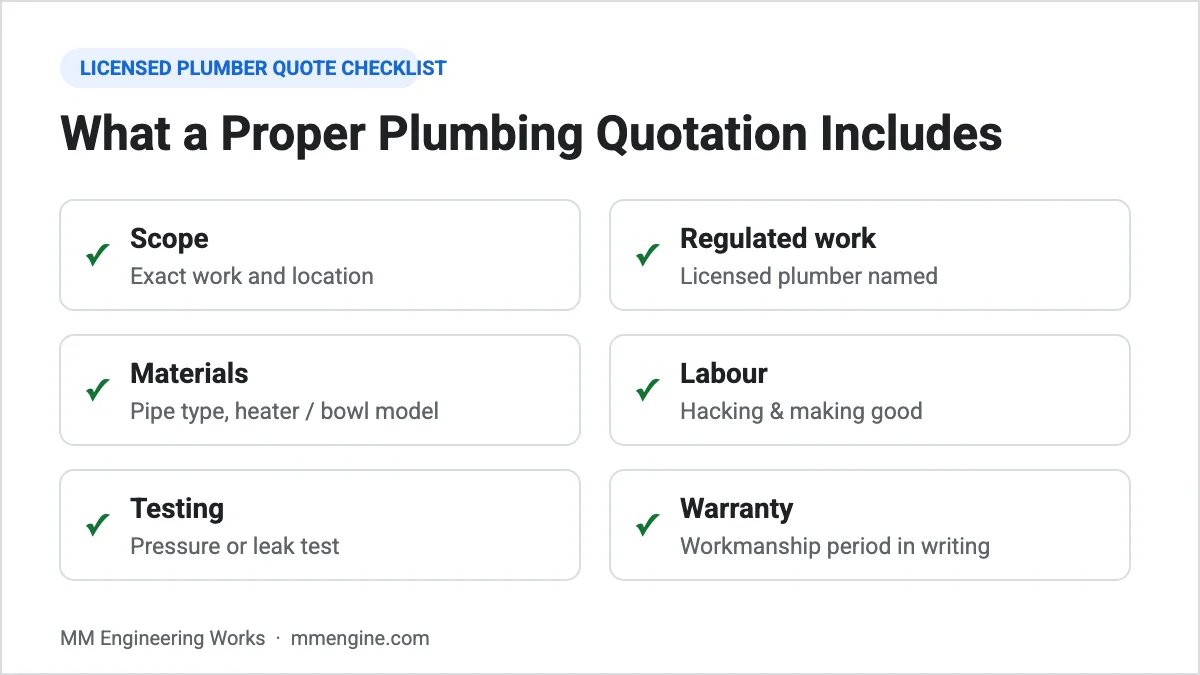
Checklist of what a water tank cleaning quotation in Singapore should include
Ask for the scope and price in writing before tank cleaning starts.
Who we serve

Water Tank Cleaning for Homes and Buildings

Storage tanks are most common where the owner manages the water supply after the meter.

Landed homes

Roof and ground tanks, usually with a booster or transfer pump.

Shophouses

Tanks serving several floors and tenants.

Commercial buildings

Panel tanks and pump sets, cleaned on a schedule. See commercial plumbing.

HDB and condos

Common tanks are maintained by the Town Council or MCST. Contact them about water quality in the block.

Why MM Engineering

Why Choose Us for Water Tank Cleaning in Singapore

MM Engineering Works has a PUB licensed plumber and is a 1st Class EMA-licensed electrical contractor, so the tank, pipes, pump and its electrical supply can all be checked in one visit.

Whole system checked

Tank, valves, pipes, pump and wiring.

Clear quotations

Scope and price confirmed before work starts.

Honest advice

Repair when it will last, replace when it will not.
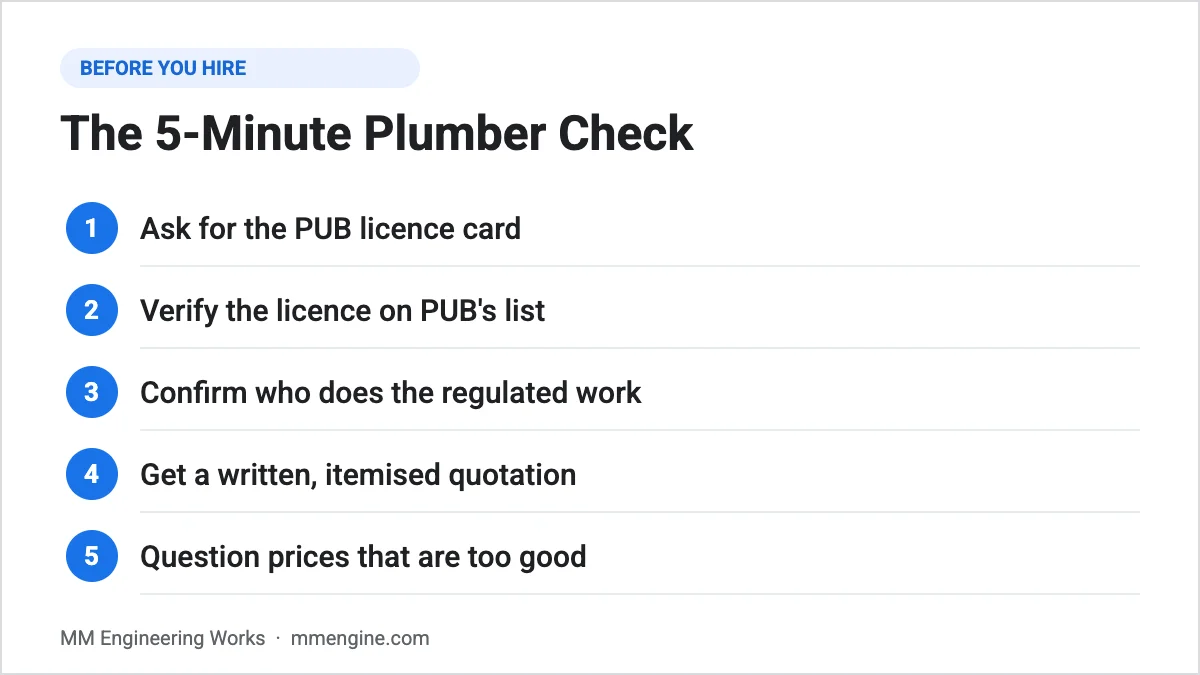
How to check a PUB licensed plumber before booking water tank cleaning
A quick check to verify a PUB licensed plumber before anyone starts work.
Care tips

How to Keep Your Water Tank Clean Between Cleanings

Simple checks keep the tank in good condition until the next cleaning.

  • Keep the lid closed and sealed. It stops insects, leaves and dust getting in.
  • Check the overflow screen. A missing screen lets pests in.
  • Watch for overflow. Water running from the overflow pipe for more than a few minutes means the float valve needs attention soon.
  • Look for leaks and rust. Check the base and connections every few months.
  • Clean tap aerators. Grit in aerators is an early sign of sediment.
  • Book an annual clean. Put a reminder in your calendar each year, ideally in the same month, so the water tank cleaning never slips and you always have a clear record of when it was last done.
Float valves

Float Valve Problems and Overflowing Tanks

The float valve controls how the tank refills. When it fails, the tank either overflows or runs empty.
  • Constant overflowThe valve does not close fully, wasting water through the overflow pipe.
  • Tank not refillingA stuck or blocked valve leaves the tank low and pumps running dry.
  • Noisy refillingWorn valve parts cause hammering or whistling.
  • Slow refillDebris in the valve or low inlet pressure.
  • Broken floatA cracked or detached float cannot shut the valve.
  • Corroded armOlder metal arms can seize or snap without warning.
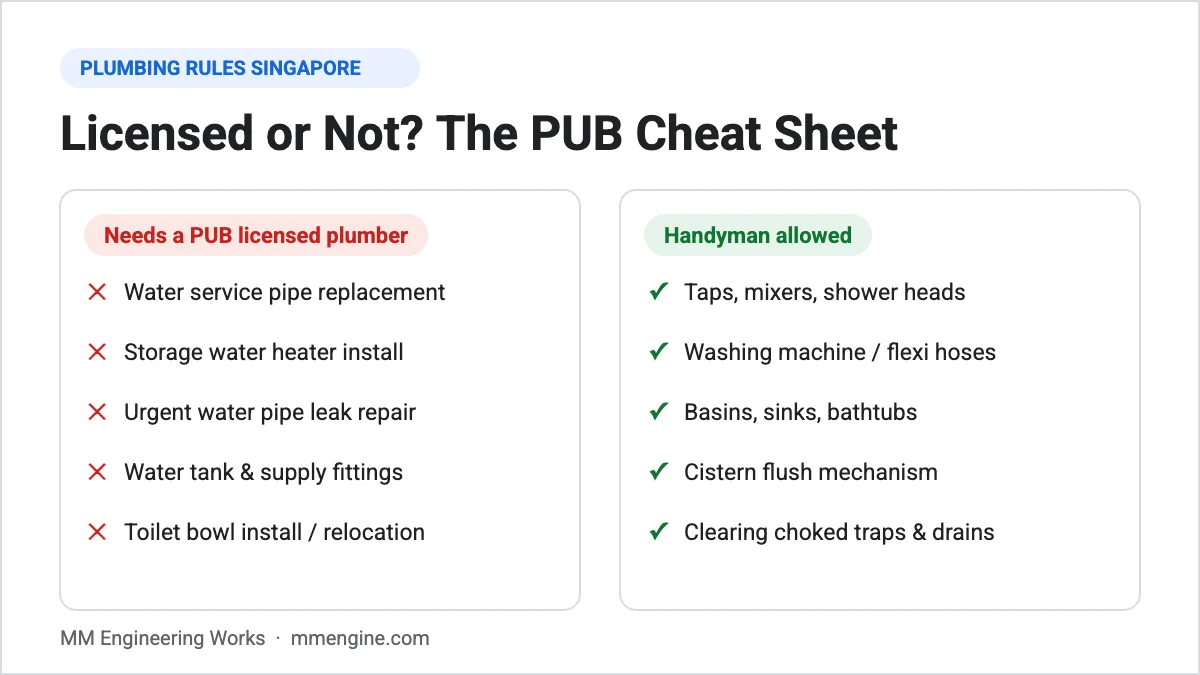
Which water tank cleaning and plumbing jobs need a PUB licensed plumber in Singapore
Which plumbing jobs need a licensed plumber and which a handyman can do.
Save time

What to Tell Us When You Book

Photos help us plan access and quote accurately. Send these on WhatsApp.

About the tank

  • Photo of the tank and its lid
  • Where it is: roof, ceiling, ground or basement
  • Approximate size or capacity, if known
  • When it was last cleaned

About the property

  • Property type and postal code
  • Whether a pump is connected
  • Any water quality problems you have noticed
  • Best day and time for water to be off
  • Whether the tank has ever overflowed, leaked or run empty, and roughly when this happened
  • Any access equipment needed, such as a tall ladder or roof key
Inside the tank

What Builds Up Inside a Water Tank?

Even with clean mains water going in, a storage tank slowly collects material that settles because the water sits still for long periods. This is why water tank cleaning is needed even when the water looks clear at the tap most of the time.

Sediment and silt

Fine particles settle on the tank floor and are stirred up when the water level drops or the pump starts.

Biofilm

A thin, slimy layer can form on the walls of the tank, especially where light gets in.

Rust flakes

Older metal fittings, pipes or tank parts shed rust that collects at the bottom.

Insects and debris

Leaves, dust and insects enter through gaps in the lid or a missing overflow screen.

Algae

Sunlight through a translucent tank or a gap in the lid can encourage algae growth.

Scale

Mineral deposits form around the float valve and inlet over time.

Prepare

How to Prepare for Water Tank Cleaning Day

A little preparation keeps the day running smoothly and limits the time your property is without water.

  1. Store water

    Fill a few containers with water for drinking, cooking and flushing during the visit.

  2. Tell everyone

    Let household members or tenants know when the water will be off.

  3. Clear access

    Move items blocking the route to the tank, ladder access points or roof hatch.

  4. Switch off appliances

    Avoid running the washing machine or water heater while the tank is being cleaned.

Aftercare

What to Do After Your Water Tank Is Cleaned

When supply is restored, a few simple steps clear any loosened sediment from your pipes.

  • Run each tap for a minute. This flushes out any sediment that was in the pipes before the tank was cleaned.
  • Clean tap aerators. Unscrew and rinse aerators and shower heads if you see grit.
  • Check the water heater. If your heater has a drain valve, it may also need flushing.
  • Watch for overflow. Check the tank overflow over the next few days to make sure the float valve is closing.
  • Note the date. Record the cleaning date so you know when the next one is due.
For owners

Water Tank Cleaning for Shophouse and Building Owners

If you own or manage a shophouse or small building, the water tank serves everyone in it. A dirty or failing tank affects every tenant at once, so planned maintenance matters even more.

Plan ahead

  • Schedule cleaning at a quiet time for tenants
  • Give tenants notice of the water shutdown
  • Keep a record of each cleaning and inspection
  • Check the pump and controls at the same visit

Watch for problems

  • Tenant complaints about water colour or smell
  • Overflowing tanks or constant pump running
  • Visible leaks, rust or cracks
  • Damaged lids, screens or access hatches
Safety

Why Water Tank Cleaning Is Best Left to Professionals

Cleaning a water tank looks simple, but it carries real risks, especially for roof tanks and large tanks in confined spaces.

  • Working at heightRoof and ceiling tanks often need ladders or roof access, with a real risk of falls.
  • Confined spacesLarger tanks can have poor ventilation and limited exits.
  • Electrical hazardsPumps and float switches nearby must be safely isolated before work starts.
  • Damage to the tankHarsh scrubbing or the wrong cleaning products can damage linings and seals.
  • ContaminationCleaning products must be fully rinsed so they do not end up in the water supply.
  • Missed faultsA professional visit also checks valves, lids and connections that DIY cleaning often skips.
Replacement

Choosing the Right Replacement Water Tank

When a tank has to be replaced, the new one should suit the property, the space and the pump system. We consider these points before recommending a tank.

Capacity

Enough storage for the household or tenants, without water sitting too long.

Material

Plastic, stainless steel or panel tanks, depending on location and budget.

Location and weight

Roof and ceiling structures must safely carry a full tank.

Connections

Inlet, outlet, overflow and drain positions that match the existing pipework.

Access for cleaning

A lid and hatch large enough for future cleaning and inspection.

Sun protection

Opaque or shaded tanks reduce algae growth.

FAQ

Water Tank Cleaning Singapore: Frequently Asked Questions

How often should a water tank be cleaned?

Many owners clean their water tank at least once a year. Tanks with sediment, insects or water quality problems may need cleaning sooner. Building owners should check PUB’s requirements for water storage tanks.

How long does water tank cleaning take?

Most tanks are cleaned in a few hours, depending on size, access and how much sediment has built up.

Will my water be off during cleaning?

Yes, for part of the visit. We suggest storing some water beforehand and we restore supply as soon as the tank is refilled.

Why is my water brown or cloudy?

Sediment in the tank or pipes is a common cause, especially after the supply has been disturbed. Tank cleaning removes the sediment at the source.

How much does water tank cleaning cost in Singapore?

It depends on tank size, access and the amount of sediment. We quote after seeing photos or the tank on site.

Can you replace an old water tank?

Yes. We remove the old tank and install a new one of suitable size and material, including connections.

Who cleans water tanks in HDB blocks and condos?

Common tanks are maintained by the Town Council in HDB estates and by the MCST in condos.

Why does my tank keep overflowing?

Usually a faulty float valve that does not close fully. We repair or replace it.

Do you service the pump as well?

Yes. We check and repair pumps connected to the tank, including their electrical supply.

What are your working hours?

We work Monday to Saturday, 9am to 6pm. WhatsApp us photos any time and we will reply during working hours.

Time to Clean Your Water Tank?

WhatsApp us photos of your tank and its location with your postal code. We will confirm the scope, the earliest slot and the price.

MM Engineering Works Pte Ltd Β· 5 Lorong 4 Geylang, #04-01, Singapore 399264 Β· contact@mmengine.com Β· Mon–Sat 9am–6pm

Request A Call Back
Leave your details
Our specialist will contact you to arrange the date and time for your measurements.
