
Electrical work is not something to try first and see how. In Singapore, one wrong connection, an overloaded socket, a loose DB box component, or poor wiring extension can cause power trips, appliance damage, electric shock, or a fire risk. and emergency?
That is why Singapore Electrical Rules exist. They protect homeowners, tenants, businesses, and neighbors by ensuring that electrical installations, repairs, testing, and modifications are handled safely. For HDB flats, condos, landed houses, shops, and offices, the safest approach is simple: understand the rules, avoid risky DIY work, and engage the right electrician for any job involving wiring, power points, circuit breakers, or the DB box.
According to Singapore’s Energy Market Authority, electrical work in homes and offices should be carried out or supervised by a Licensed Electrical Worker, including wiring, power point additions, lighting point changes, and circuit breaker replacements. HDB also states that homeowners should engage an EMA-licensed electrical worker for electrical work and that the LEW may apply for electrical or air-conditioner installation permits where required.
What are Singapore’s electrical rules?
Singapore Electrical Rules are the safety and compliance requirements that control how electrical work should be carried out in homes, offices, and commercial units. These rules are linked to electrical safety, proper installation standards, approved electrical load, and the need for qualified workers.
In simple terms, the rules guide:
- Who can carry out electrical work
- What type of work needs proper supervision
- When permits or approvals may be needed
- How electrical wiring, DB box, RCCB, MCB, switches, lighting, and power points should be installed
- How electrical systems should be tested before use
For homeowners, this means electrical work should not be treated like basic furniture assembly. Changing a light bulb is different from relocating a lighting point. Plugging in an appliance is different from adding a new socket outlet. Resetting a circuit breaker is different from replacing one.
EMA states that a Licensed Electrical Worker may design, install, repair, maintain, operate, inspect, and test electrical or supply installations in accordance with the worker’s license class.
Why Singapore Electrical Rules Matter for Homes and Businesses
Singapore homes use many high-demand appliances: air-conditioners, water heaters, induction cookers, washing machines, dryers, ovens, chargers, smart devices, and computers. In older HDB flats, aging wiring may not always match today’s electrical load. In landed houses, outdoor lighting, pumps, gates, and extensions can add more stress to the system.
That is where the Singapore Electrical Rules become important. They reduce the risk of:
- Overloaded circuits
- Frequent power trip Singapore issues
- Burnt socket outlets
- Loose wiring inside the DB box
- Faulty RCCB protection
- Electric shock
- Electrical fire hazards
- Non-compliant renovation work
For businesses, electrical safety is even more critical. A small office, retail shop, clinic, tuition center, or F&B unit may have computers, lighting, signage, refrigerators, and equipment running for long hours. Poor wiring can disrupt operations and create safety risks for staff and customers.
Common Electrical Work That Must Be Handled Properly
Not every electrical task is equal. Some jobs may look simple from the outside but involve live wiring, load calculation, earthing, circuit protection, and testing.
Power Point Installation and Relocation
Adding or relocating power points must be done carefully. The electrician needs to check the existing circuit, wiring route, load demand, and whether the new point can safely support the appliance.
This is common during renovation when homeowners want sockets near a TV console, study table, kitchen counter, washing machine area, or bedside wall. Poor socket installation can lead to overheating, loose contact, or repeated tripping.
Lighting Installation and Ceiling Fan Points
Lighting installation may involve new wiring, switches, dimmers, false ceiling routes, or smart lighting controls. Ceiling fan installation also needs proper support and a safe electrical connection.
For HDB, condo, and landed homes, lighting and fan points should not be modified casually. Wrong wiring can affect the circuit breaker, cause flickering, or lead to future faults hidden above the ceiling.
DB Box, Circuit Breaker, RCCB, and MCB Work
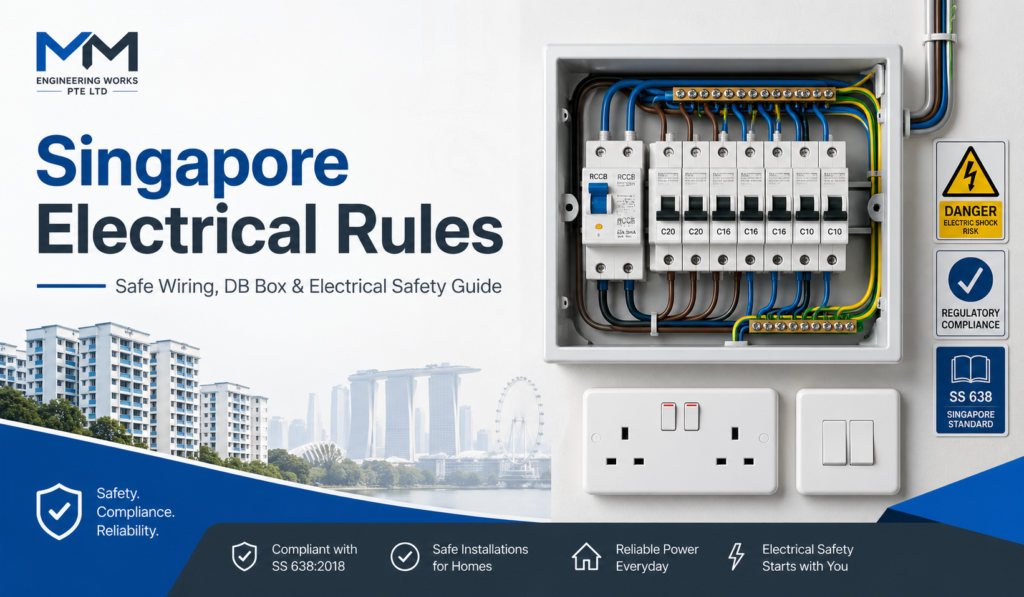
The DB box is the control center of your electrical system. It usually contains the main switch, RCCB, MCBs, and circuit protection devices.
If your home has frequent tripping, buzzing sounds, burning smells, loose breakers, or old components, the DB box should be checked by a competent electrician. Repair or replacement of consumer control units or circuit breakers is listed by EMA as work that should be carried out or supervised by a Licensed Electrical Worker.
Electrical Wiring and Rewiring
Wiring work is one of the most important areas under the Singapore Electrical Rules. It affects safety behind walls, ceilings, trunking, and distribution points.
Rewiring may be needed when:
- The property is old
- Wires are damaged or brittle
- Sockets feel warm
- The lights flicker often
- The DB box trips repeatedly
- Renovation changes the electrical layout
- High-load appliances are being added
Electrical wiring regulations in Singapore exist because hidden wiring faults can be dangerous even when everything looks normal from the outside.
When You Should Call a Licensed Electrical Worker
You should call a licensed electrical worker in Singapore for work involving fixed wiring, power points, switches, circuit breakers, DB box parts, RCCB, MCB, electrical loads, or testing.
Call a qualified electrician when you need:
- New power point installation
- Socket relocation
- Lighting point relocation
- Ceiling fan wiring
- DB box inspection
- Circuit breaker replacement
- RCCB or MCB troubleshooting
- Electrical inspection before renovation
- Power trip diagnosis
- Electrical installation for new appliances
- Rewiring or wiring extension
The key point is this: if the job involves the property’s permanent electrical system, do not treat it as DIY.
What Homeowners Should Never DIY
Many Singapore homeowners are careful with renovation costs, but electrical DIY is not the right area to save money.
Avoid DIY for:
- Opening the DB box
- Replacing circuit breakers
- Extending electrical wiring
- Installing new socket outlets
- Connecting water heater wiring
- Modifying lighting points
- Bypassing a tripping RCCB
- Using oversized breakers to stop power trips
- Joining wires with tape inside ceilings or cabinets
- Overloading extension plugs for permanent use
A common mistake is thinking that a power trip is solved once the switch is turned back on. If the RCCB or circuit breaker trips again, the system is warning you. There may be leakage current, a faulty appliance, a damaged cable, a moisture issue, or an overloaded circuit.
Common Warning Signs of Unsafe Electrical Systems
Electrical problems often give early warning signs before they become serious. Do not ignore them.
Look out for:
- Repeated power trips
- Burning smell near sockets or DB box
- Warm or discolored socket outlets
- Flickering lights
- Buzzing sound from switches or breakers
- Sparks when plugging in appliances
- RCCB trips when using the washing machine or the heater
- MCB trips when using the induction cooker or oven
- Old wiring with cracked insulation
- Lights dimming when heavy appliances start
In Singapore’s humid weather, moisture can also worsen electrical faults, especially near kitchens, bathrooms, balconies, outdoor areas, and older landed properties. If you see water leakage near electrical fittings, switch off the affected area and arrange an electrical inspection.
How MM Engineering Supports Safe Electrical Work in Singapore
MM Engineering Works Pte Ltd helps homeowners and businesses handle electrical issues with a safety-first approach. The team supports electrical troubleshooting, DB box checks, power trip repairs, lighting installations, fan installation electrician Singapore HDB, power point installations, RCCB and MCB issues, and emergency electrician services.
For HDB flats, condos, landed houses, small offices, and commercial units, MM Engineering focuses on thorough inspections before repairs. This means identifying the root cause rather than just resetting a breaker or replacing a visible part.
Whether your issue is a sudden power trip, an old wiring concern, a faulty socket, or a renovation-related electrical installation, the goal is to keep the system safe, practical, and compliant with Singapore Electrical Rules.
FAQs About Singapore Electrical Rules
1. What are the Singapore Electrical Rules for homeowners?
The Singapore Electrical Rules are safety and compliance guidelines for electrical wiring, DB box work, power points, lighting, circuit breakers, RCCBs, and electrical installations. They help ensure electrical work is carried out safely by qualified workers where required.
2. Do I need a Licensed Electrical Worker for HDB electrical work?
Yes, for electrical work involving wiring, power points, lighting points, circuit breakers, DB box, or electrical installation, homeowners should engage an EMA-licensed electrical worker. HDB also states that the LEW may apply for electrical installation permits where required.
3. Can I install a new power point myself in Singapore?
No, homeowners should not DIY new power point installation. Adding a socket involves wiring, load checking, proper connection, and testing. Poor installation can cause overheating, tripping, or an increased risk of electrical shock.
4. Why does my RCCB keep tripping?
An RCCB may trip because of earth leakage, faulty appliances, moisture, damaged wiring, or circuit issues. If it trips repeatedly, do not bypass it. Arrange an electrical inspection to find the real cause.
5. What electrical work is unsafe to DIY?
You should not DIY DB box work, circuit breaker replacement, wiring extension, socket installation, water heater wiring, lighting point relocation, or RCCB troubleshooting. These jobs can affect the safety of the whole electrical system. Daylight electrician Singapore.